
A 14,400-year-old wolf puppy’s last meal is shedding light on the last days of one of the Ice Age’s most iconic megafauna species, the woolly rhinoceros.
When researchers dissected the frozen mummified remains of an Ice Age wolf puppy, they found a partially digested chunk of meat in its stomach: the remnants of the puppy’s last meal 14,400 years ago. DNA testing revealed that the meat was a prime cut of woolly rhinoceros, a now-extinct 2-metric-ton behemoth that once stomped across the tundras of Europe and Asia. Stockholm University paleogeneticist Sólveig Guðjónsdóttir and her colleagues recently sequenced a full genome from the piece of meat, which reveals some secrets about woolly rhino populations in the centuries before their extinction.
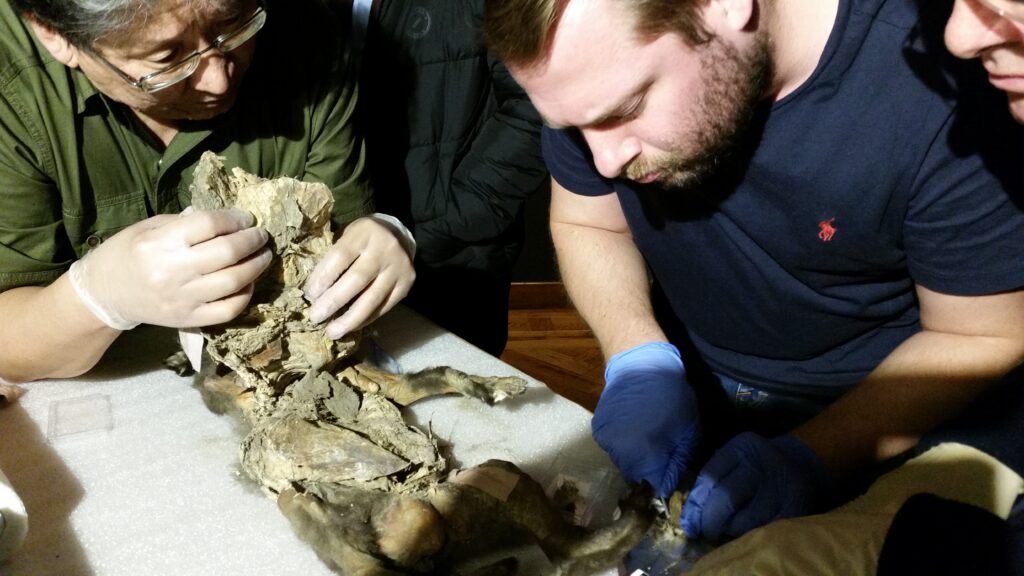
Scientists carefully autopsy the remains of a wolf puppy who lived and died 14,400 years ago near Tumat village in Sibera.
Credit:
Guðjónsdóttir et al. 2026
One bad day for a rhino, one giant leap for paleogenomics
“Sequencing the entire genome of an Ice Age animal found in the stomach of another animal has never been done before,” said Uppsala University paleogeneticist Camilo Chacón-Duque, a coauthor of the study, in a recent press release.
Read full article
Comments